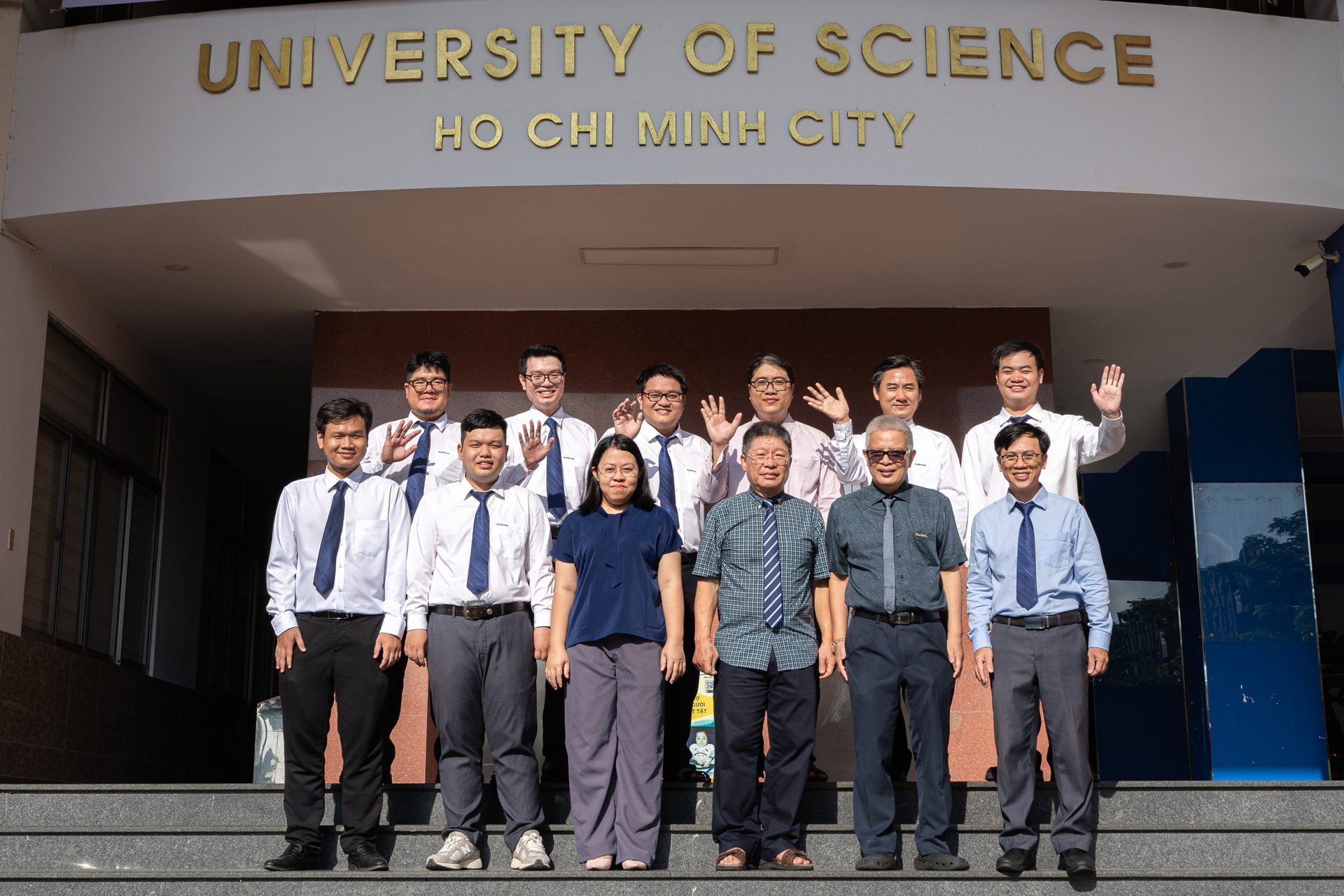

The programme develops advanced knowledge and research skills in computer science, including data, AI and information security. Students practise building computing systems and software products.
An overview of the content and organisation of the programme, based on the Programme Specification.
The programme offers three specialisations: Computer Science, Knowledge Engineering, and Computer Vision and Intelligent Cybernetics. Course groups cover data science, information security, natural language processing and visual data science.
The information security group includes advanced cryptography, blockchain technology and privacy-preserving data analysis.
Students choose research, applied study with a thesis, or applied study with an internship and project. All three tracks share the same learning outcomes.
Students may join research groups in natural language processing, cryptography, computer vision, AI and data science. The Faculty announces international opportunities and selection requirements for each round.
Learning outcomes, structure and course list: Programme page. Graduate teaching staff of the Faculty: Lecturers.
The programme comprises 60 credits (120 ECTS), with a standard duration of two years across four semesters. All three study tracks share the same learning outcomes.
Research and thesis work carry 29 credits. A scientific publication or a research result with an accepted intellectual-property application is required before the defence. This track supports research and doctoral study.
Students complete taught courses and a 13-credit thesis on an applied topic.
Students complete taught courses, a 6-credit internship and a 7-credit graduation project linked to a problem at the host organisation.
Credit allocation per track: see Structure; registration, supervision and defence: Thesis and Graduation.
The eligible and related fields below, with their bridging courses, follow the Faculty admission notices and the Programme Specification. Check each admission notice for the applicable list, language requirements, dates and tuition fees.
Informatics · Information Technology · Computer Science · Software Engineering · Information Systems · Artificial Intelligence · Computer Networks and Data Communication · Data Science · Information Security · Computer Engineering Technology · Informatics Education · Management Informatics · Management Information Systems · Economic Information Systems · Data Engineering.
| Bachelor's major | Bridging courses |
|---|---|
| Mathematics, Mathematics–Informatics, Physics, Electronics–Telecommunications, Cybernetics, Biomedical Engineering, Industrial Management, Electrical–Electronic Engineering Technology, Electrical Engineering (Power Systems), Electrical–Communication Engineering Technology, Electrical–Electronic Engineering, Mechatronics Engineering, Mechatronics, Electrical Engineering and Information Technology (Vietnamese-German University) | Programming Techniques · AI Algorithms and Applications · Databases · Data Structures |
| Logistics and Supply Chain Management | Programming Techniques · AI Algorithms and Applications · Data Structures |
| Control Engineering and Automation | AI Algorithms and Applications · Databases · Data Structures |
| Mechatronics, Mechanical (Aerospace) Engineering | AI Algorithms and Applications · Databases |
| E-commerce | AI Algorithms and Applications |
| Other related majors | Considered case by case by the Admissions Board |
The Office of Graduate Studies publishes admission notices, bridging course schedules, language requirements and tuition fees.
The Faculty re-posts these announcements under Graduate Admissions on its website.According to the Programme Specification, graduates can work in the following positions.
Research in natural language processing, cryptography, computer vision, artificial intelligence and data science, supported by the research groups of the Faculty and VNU-HCM.
Computer-science specialist and knowledge-intensive product development in companies at home and abroad.
Teaching and research at universities and research institutes.
Start-ups and technology innovation built on intelligent computing solutions.
Find job vacancies, industry partners and cooperation activities on the Faculty website.
Graduates may apply for a relevant doctoral programme in Vietnam or abroad when they meet its admission requirements. Interested students should explore research areas, potential supervisors and publication requirements.
Most linked Faculty and University pages are in Vietnamese.
Classes may be scheduled in the evenings and at weekends at the 227 Nguyễn Văn Cừ campus. Check your intake notices for the venue, timetable and course schedule.
The standard duration is two years (24 months). Under University regulations students may graduate early (not under one year) or extend, with a total of no more than four years.
Applicants from related fields complete bridging courses before admission. The Admissions Board considers other fields individually. Check the list above and the Office of Graduate Studies notices.
Entry: level 3/6 of the Vietnamese framework (≈ B1) or an equivalent certificate (applicants without a certificate sit the University's English test). Exit: level 4/6 (≈ B2). Details and the list of recognised certificates follow the announcements of the Office of Graduate Studies.
Tuition is published in each admission notice and the Student Handbook for your intake. Check the Office of Graduate Studies.
Yes, under the University's regulation on master's theses written in English (approved when the topic is registered). The language of instruction is Vietnamese.
Graduates may apply for doctoral study when they meet the admission requirements. See Doctoral study above for admission information and research areas on the Thesis page.